


Learn how to use realistic stock AI avatars for social media—build a repeatable cast, create AI avatar videos for TikTok & Reels, and stay consistent without filming.
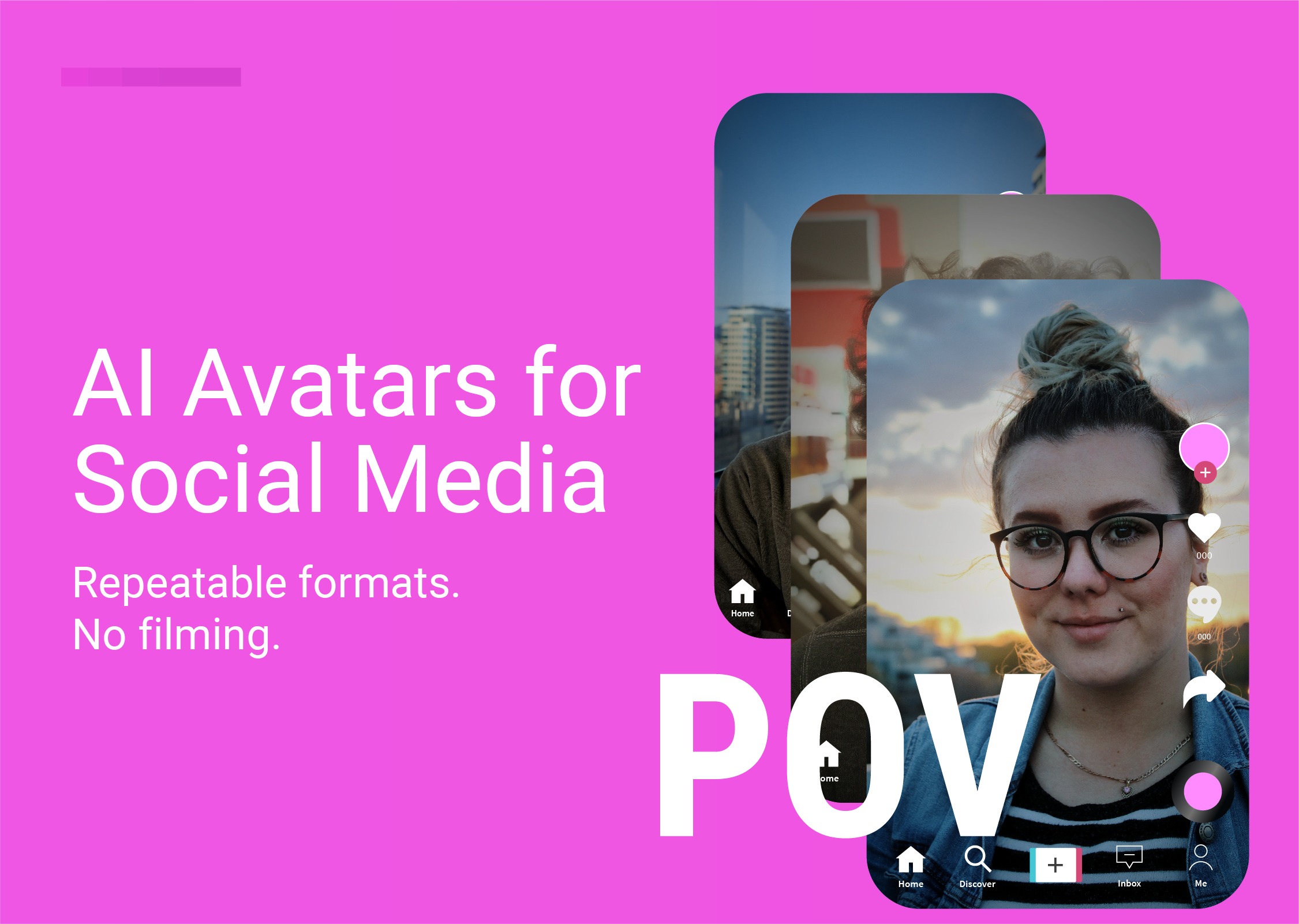
Brands don’t struggle with ideas — they struggle with showing up on camera consistently.
Short-form platforms (TikTok, Instagram Reels, Facebook Reels) reward volume, consistency, and recognizable formats. But for most teams, filming becomes the bottleneck: it’s time-consuming, awkward, hard to scale, and often depends on one person who eventually burns out.
That’s the problem AI avatars for social media can help solve — giving brands a way to create human-feeling AI avatar videos without needing to film every week.
A big avatar library is useful — it gives you variety.
But on organic social, variety isn’t the main challenge.
The main challenge is relatability. People decide in seconds whether they trust the face, the vibe, and the point of view. If the delivery feels flat, overly polished, or “generic stock,” viewers scroll — even if the script is good.
That’s why, for TikTok/Reels-style content, it helps to think in two layers:
The avatar (the face): does it feel human enough to watch?
The character (the role): does the viewer recognize themselves in the perspective?
Stock-looking avatars can absolutely have a place (training content, internal comms, straightforward explainers). But for organic social, the content usually performs best when it has a human touch — a human feel and a recognizable archetype someone the audience can relate to.
LipSynthesis combines a large stock library of digital avatars with realistic, human-feeling avatars — so you can match the look + vibe to your intent (not settle for “generic stock”).
When brands use AI avatar videos for organic social, performance usually comes down to relatability, not production value. Relatability is something you can design on purpose using three levers:
Face (human feel)
Does the avatar feel like a real person you’d actually stop for? Natural presence, believable delivery, not “corporate presenter” energy.
Role (recognizable archetype)
People don’t follow “a face.” They follow a point of view. Give the avatar a role viewers instantly understand: the practical one, the explainer, the creator friend, the skeptic.
Specificity (real-life language + scenarios)
Generic scripts feel like ads. Specific scripts feel like someone talking from experience. Use concrete situations, constraints, and opinions.
What “specificity” looks like in practice:
Practical voice: “If this takes more than 10 minutes to set up, I’m not doing it.”
Friendly explainer: “Here’s the simple version: you’re not making magic — you’re repeating a process that works.”
Creator friend: “If you’ve ever deleted a video because you hated how you looked — same. Let’s make this easier.”
Skeptic with receipts: “If someone promises instant virality, close the tab. Here’s what actually moves the needle.”
When people hear “AI avatar,” they often jump to the idea of a virtual influencer.
That’s not the goal here.
Stock AI avatars are a plug-and-play way to create human-feeling videos for your brand — without needing to film constantly. You choose an avatar that matches the vibe you want (look, setting, energy), then you run repeatable content formats (series) that your audience recognizes.
If you’re evaluating AI avatar tools for social media content, here are the key features that matter most for organic short-form (and for keeping your workflow simple).
Realistic avatars + lifelike delivery: look for natural facial expressions, believable facial features, and a “digital person” that doesn’t feel stiff.
Accurate lip sync: good lip sync (lip syncing / lip syncing accuracy) is what makes the final video feel watchable.
Voice options: voice cloning and multiple languages (multilingual support) help you reach global audiences.
Custom avatar support: the ability to create your own AI avatar (personal avatars) — sometimes called a digital twin or lifelike digital version.
Fast video creation: an intuitive interface that helps you generate videos in minutes (without complex workflows).
Use-case fit: social media content, product demos, and even corporate training content when you need consistent delivery.
LipSynthesis includes a large stock avatar library — which is the point: you get options.
Different brands need different “faces” and different delivery styles. Some teams want a practical, no-hype vibe. Others want a friendly explainer. Some want warm creator energy. Others want a skeptical, proof-first tone.
So we picked four avatars from the library and gave them simple personalities.
Not because these are the only options — but to show what’s possible when you intentionally match an avatar’s vibe to your content goal. Think of this as a starting story you can copy, remix, or replace with your own picks.
Best for: simple hooks, common-sense takes, “here’s what actually matters” content.
Use a Mark-type avatar when your goal is:
Relatability (especially for small business audiences)
Cutting through buzzwords
Making content feel grounded and real
Best for: educational breakdowns, product demos, “here’s how it works in 30 seconds.”
Use an Alex-type avatar when your goal is:
Teaching without sounding corporate
Making tech feel accessible
Turning complex topics into simple scripts
Best for: encouragement, community-first content, entertaining “Too Honest” formats.
Use a Maya-type avatar when your goal is:
Positive, human energy
Creator-style storytelling
Building a following (not just views)
Best for: myth-busting, honest comparisons, “what’s true vs what’s hype.”
Use a Casey-type avatar when your goal is:
Credibility and trust
Comment-driving takes
Keeping your messaging honest and specific
You don’t need a new concept every day. You need 3–4 repeatable series and avatars that can deliver them.
Here are formats that work across niches — and map well to different avatar creators and personality types.
Why it works: it’s a familiar format that earns watch time and shares.
Best Avatars: Maya (warm honesty), Casey (data-driven honesty)
Example Prompts:
Tech/Tools:
"Too honest review: AI writing assistants (1–10)"
"Rating productivity apps that promise to change your life"
"Too honest review: Notion (does it actually organize your life?)"
"Rating email management tools (spoiler: none of them work)"
"Too honest review: project management software"
Trends/Culture:
"Rating the 'morning routine' trend"
"Too honest review: hustle culture"
"Rating the 'work-life balance' concept"
"Too honest review: influencer advice"
"Rating the 'side hustle' movement"
Products/Services:
"Too honest review: expensive coffee"
"Rating meal prep containers"
"Too honest review: gym memberships"
"Rating self-help books"
"Too honest review: subscription services"
Marketing/Business:
"Rating marketing advice I keep seeing on my feed (1–10)"
"Too honest review: personal branding"
"Rating the 'build in public' trend"
"Too honest review: networking events"
"Rating LinkedIn advice from 'thought leaders'"
Creator Culture:
"Too honest review: creator economy promises"
"Rating the 'be authentic' advice"
"Too honest review: growth hacking strategies"
"Rating viral video formulas"
"Too honest review: personal brand building"
Why it works: quick clarity is highly saveable and shareable.
Best Avatars: Alex (friendly explainer), Casey (proof-first analyst)
Example Prompts:
Tech Concepts:
"Explain this in 30 seconds: what makes a video feel authentic?"
"What is an algorithm and why does it matter?"
"3 reasons your AI-generated content looks fake"
"How to spot a deepfake in 60 seconds"
"What's the difference between AI and automation?"
Creator Strategy:
"3 reasons your ads look polished but don't convert"
"Why consistency beats virality (the data)"
"4 things that kill video engagement in the first 3 seconds"
"Why your 'perfect' video isn't performing"
"The real reason people unfollow creators"
Content Trends:
"Why POV videos work (the psychology)"
"What makes a trend actually trend?"
"Why short-form video outperforms long-form (by the numbers)"
"The science behind why certain sounds go viral"
"Why authenticity actually performs better (with data)"
Business/Marketing:
"3 metrics that actually matter (not vanity metrics)"
"Why your marketing message isn't landing"
"The real cost of chasing viral moments"
"Why niche beats broad (the data)"
"How to actually calculate ROI on content"
Psychology/Human Behavior:
"Why people actually buy (it's not what you think)"
"The psychology of why certain CTAs work"
"Why your audience doesn't trust you yet"
"What actually drives engagement (spoiler: it's not likes)"
"Why people share content (the real reasons)"
Productivity/Mindset:
"Why your productivity app won't help (the truth)"
"3 reasons you're not actually productive"
"What successful people actually do differently"
"Why motivation is overrated (and what works instead)"
"The real reason you procrastinate"
Why it works: it creates a strong point of view and invites debate.
Best Avatars: Casey (skeptical analyst), Mark (practical wisdom)
Example Prompts:
Creator Myths:
"Myth: you need to post 3 times a day to grow"
"Myth: viral videos are the key to success"
"Myth: you need a perfect aesthetic to stand out"
"Myth: more followers = more money"
"Myth: you need to chase every trend"
Tech Myths:
"Myth: AI will replace all creators"
"Myth: you need expensive equipment for good videos"
"Myth: algorithms are against small creators"
"Myth: you need to optimize every second of video"
"Myth: more editing = better performance"
Productivity Myths:
"Myth: you need a productivity app to get more done"
"Myth: waking up at 4am makes you successful"
"Myth: multitasking makes you more efficient"
"Myth: working more hours = better results"
"Myth: you need a perfect morning routine"
Business Myths:
"Myth: you need a huge budget to start"
"Myth: overnight success is real"
"Myth: you need to be perfect to launch"
"Myth: more features = better product"
"Myth: growth is always linear"
Marketing Myths:
"Myth: your message needs to appeal to everyone"
"Myth: pretty design = better conversion"
"Myth: more information = better persuasion"
"Myth: you need a viral moment to succeed"
"Myth: social proof is the only thing that matters"
Mindset Myths:
"Myth: passion is all you need"
"Myth: you need to love what you do"
"Myth: success requires sacrifice"
"Myth: confidence comes before action"
"Myth: you need to be naturally talented"
Trend Myths:
"Myth: you need to be on every platform"
"Myth: TikTok is only for Gen Z"
"Myth: LinkedIn is just for job hunting"
"Myth: Instagram is dead"
"Myth: YouTube Shorts will replace long-form"
Why it works: POVs feel native to TikTok/Reels and can be adapted to any niche.
Best Avatars: Mark (relatable frustration), Maya (creator POV), Alex (tech culture POV)
Example Prompts:
Tech Culture POVs (Alex-type):
"POV: someone's explaining crypto to you"
"POV: your non-tech friend asks you to fix their computer"
"POV: someone says 'have you tried turning it off and on again?'"
"POV: you're trying to explain AI to your parents"
"POV: someone asks 'why do you have so many passwords?'"
"POV: you discover a new app and become obsessed"
"POV: someone doesn't know how to take a screenshot"
"POV: someone asks 'is this a scam?'"
Creator Culture POVs (Maya-type):
"POV: someone asks what you do for work"
"POV: you're hyping up a friend's new project"
"POV: someone tells you they want to go viral"
"POV: you're explaining content strategy to a beginner"
"POV: someone asks how you come up with ideas"
"POV: you're mentoring someone in your niche"
"POV: someone asks if you make money from this"
"POV: you're celebrating a creator's win"
Practical/Skeptical POVs (Mark-type):
"POV: someone's explaining crypto to you"
"POV: someone tells you their productivity hack"
"POV: your kid asks you to be in their TikTok"
"POV: someone pitches you their startup idea"
"POV: someone tells you to 'follow your passion'"
"POV: someone explains wellness trends to you"
"POV: someone asks why you don't use the latest app"
"POV: someone tries to sell you on a trend"
Data/Skeptical POVs (Casey-type):
"POV: you see a viral post with no sources"
"POV: someone makes a claim without data"
"POV: a marketing email says 'limited time offer'"
"POV: someone shares a statistic without context"
"POV: you're fact-checking a viral claim"
"POV: someone asks 'but what does the data say?'"
"POV: you're looking at vanity metrics"
"POV: someone tries to convince you without evidence"
Universal Frustration POVs:
"POV: you're trying to remember your password"
"POV: someone asks 'can you make it go viral?'"
"POV: you're explaining why something takes time"
"POV: someone asks 'why is this so expensive?'"
"POV: you're dealing with imposter syndrome"
"POV: someone asks 'when will you be famous?'"
"POV: you're explaining why you need a break"
"POV: someone compares you to a bigger creator"
Niche-Specific POVs:
"POV: you're a [niche] and someone doesn't understand"
"POV: someone asks the same question for the 100th time"
"POV: you're explaining why your niche matters"
"POV: someone dismisses your expertise"
"POV: you're dealing with a common misconception"
"POV: someone asks 'but can you make money from that?'"
"POV: you're explaining the value of your work"
"POV: someone tries to do your job for free"
A simple schedule examplefor a small team:
Mon: Educational breakdown (Alex-type)
Wed: POV (Mark-type or Maya-type)
Fri: Too Honest Review (Maya-type or Casey-type)
Consistency beats intensity.
With AI avatars for social media, you’re not just choosing a face — you’re choosing the delivery style.
Want “no fluff, just results”? Pick a Mark-type vibe.
Want clarity and calm teaching? Pick an Alex-type vibe.
Want warmth and community energy? Pick a Maya-type vibe.
Want credibility and honesty? Pick a Casey-type vibe.
That’s how you keep content feeling human while scaling output.
What are AI avatars for social media?
AI generated avatars (digital avatars) you can use to create video content for social media platforms without filming.
Can I create my own AI avatar (custom avatar)?
Many avatar generators let you create a custom avatar (personal avatar) from your own video — sometimes called a digital twin or digital representation. Here's a guide for the best result with Lipsynthesis.
Do AI avatar videos support multiple languages?
Many AI avatar tools offer multiple languages and multilingual support through voice options (including voice cloning).
What matters most for realistic avatars?
Natural facial expressions, facial features, and accurate lip sync (lip syncing) are what make a lifelike avatar feel watchable.
Pick one series
Pick two avatars with different vibes
Publish 3 posts/week for two weeks.
Double down on the format that earns the most saves, shares, and comments.
On social media, the brands that win aren’t always the ones with the most polished videos — they’re the ones that show up consistently.
That’s where AI avatars for social media help most: you can create video content without filming, without wasting time, and without depending on one person to be “the face” of the brand.
And you don’t need a huge cast to make this work.
For many creators and teams, one or two realistic AI avatars is enough — as long as the vibe matches your intent and the delivery feels human (natural facial expressions, accurate lip sync, and scripts that sound like real life).
Ready to try it?
Explore LipSynthesis’s library of realistic stock AI avatars — real people filmed on location, diverse, and ready for your scripts. Or create your own custom avatar and scale your presence without filming every week.
Because the best AI avatar videos don’t just help you post more.They help you show up like a real brand — every week.
Browse Realistic Stock Avatars → Sign up now
Create Your Custom Avatar → Custom AI avatars guide
By the LipSynthesis TeamWe’re on a mission to make video creation accessible to everyone — using real people, not CGI. LipSynthesis helps you generate AI avatar videos with realistic, human-feeling avatars (stock or custom), so you can create more content with less friction.Explore our platform at https://lipsynthesis.com or read more insights on our blog.